
The Egyptian Book of the Dead: Unlocking the Secrets of the Ancient Egyptian Afterlife
The Egyptian Book of the Dead: Unlocking the Secrets of the Ancient Egyptian Afterlife
Discover how the ancient Egyptians prepared for eternity through one of history’s most extraordinary religious texts.
For the ancient Egyptians, death was never viewed as the end of life. Instead, it marked the beginning of an extraordinary voyage into another world—a realm filled with divine beings, supernatural challenges, sacred knowledge, and the promise of eternal existence. While many ancient civilizations feared death as an unknown fate, the Egyptians believed that with proper preparation, moral integrity, and the guidance of powerful religious texts, every worthy soul could achieve everlasting life.
At the heart of these beliefs was one of the most influential works ever created in the ancient world: the Egyptian Book of the Dead. More than a collection of funerary spells, it was a carefully assembled guide designed to help the deceased navigate the mysterious underworld, overcome dangerous obstacles, and stand successfully before the gods in the final judgment.
Today, thousands of years after it was first written, the Book of the Dead continues to fascinate archaeologists, historians, and travelers alike. Its beautifully illustrated papyrus scrolls reveal not only the religious beliefs of Ancient Egypt but also the civilization’s profound understanding of morality, justice, and humanity’s universal desire to overcome death.
Whether displayed in museums or discovered within richly decorated tombs, these ancient manuscripts remain among the most remarkable treasures ever recovered from the Nile Valley.
What Is the Egyptian Book of the Dead?
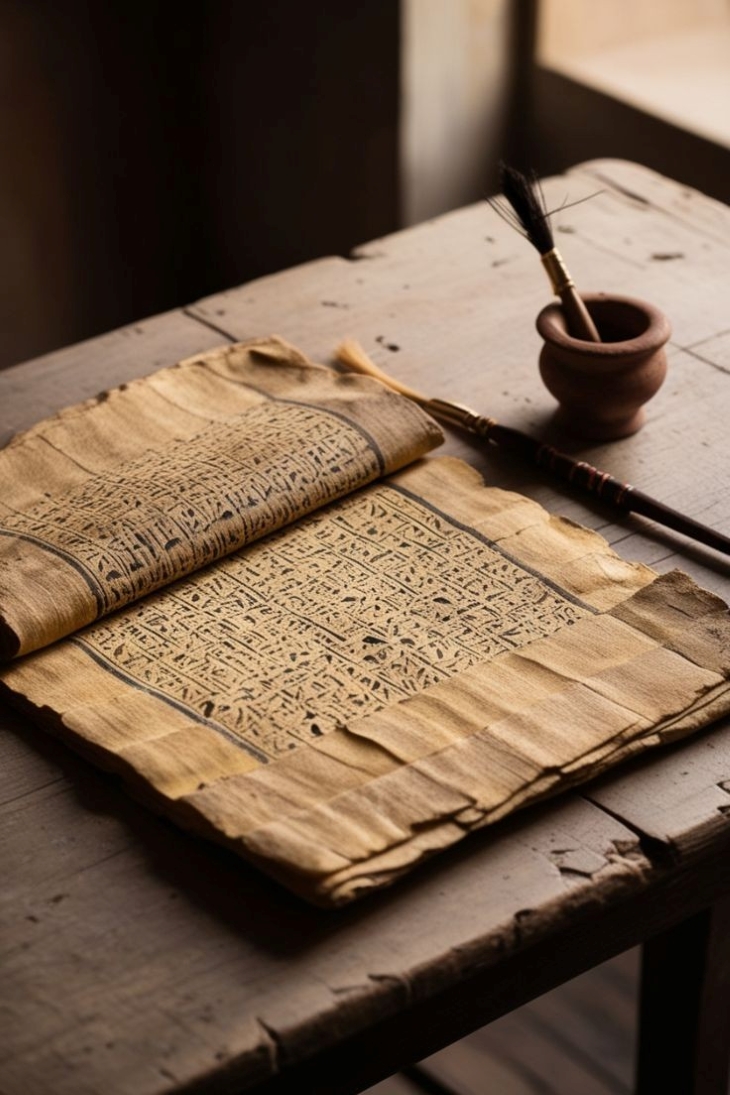
Despite its famous modern name, the Book of the Dead was never intended to be a single book in the way we think of books today. Instead, it was a collection of sacred texts, magical formulas, prayers, hymns, and illustrations assembled to assist the deceased during every stage of the afterlife journey.
Ancient Egyptians referred to these writings as:
The Book of Coming Forth by Day.
This poetic title reflects one of the central promises of Egyptian religion: that death was not a permanent descent into darkness, but rather a transition to renewed life. Just as the sun god Ra disappeared beneath the horizon each evening only to rise again at dawn, the human soul also hoped to emerge from the darkness of the underworld and begin a new existence among the gods.
Rather than producing identical copies, Egyptian scribes customized each manuscript according to the owner’s wealth, occupation, personal preferences, and religious traditions. Some papyrus contained only a few essential spells, while others stretched for more than twenty meters and included hundreds of carefully painted illustrations.
Because each manuscript was individually commissioned, no two surviving copies are exactly alike.
Why Was the Book of the Dead So Important?
To modern readers, the Book of the Dead may resemble an ancient collection of myths or magical incantations. For the Egyptians, however, it represented something far more practical.(It was a survival guide).
The Egyptians believed that the soul’s journey after death was filled with uncertainty. Beyond the tomb lay an unfamiliar landscape inhabited by powerful gods, terrifying demons, mysterious gateways, enchanted lakes, rivers of fire, and dangerous creatures capable of destroying an unprepared traveler forever.
Simply living a good life was not enough.
The deceased also needed knowledge—knowledge of sacred names, protective spells, ritual formulas, and the correct responses to divine guardians encountered along the way.
Without this wisdom, even a virtuous soul risked becoming lost within the underworld.
The Book of the Dead provided that knowledge.
In many ways, it functioned like a spiritual passport, a map, a prayer book, and a manual for eternal life all at once.
More Than Magic: A Reflection of Ancient Egyptian Values
Although the Book of the Dead contains hundreds of magical spells, reducing it to a book of magic would be misleading. (Its deeper purpose was moral).
Throughout its chapters, the text repeatedly emphasizes honesty, justice, compassion, self-control, and respect for divine order. Eternal life was not granted simply because someone possessed expensive papyrus scrolls or elaborate tombs. Instead, the deceased ultimately had to prove that they had lived according to (Ma’at), the fundamental principle of truth, balance, harmony, and justice that governed both the universe and human society.
This emphasis on ethical behavior distinguishes Egyptian religion from many misconceptions that portray it as a system based solely on rituals or supernatural beliefs.
For the ancient Egyptians, actions during life mattered just as much as preparation for death.
The Origins of the Book of the Dead
.
The Book of the Dead did not appear suddenly. Instead, it evolved gradually over more than a thousand years, reflecting the changing religious beliefs of Ancient Egypt while preserving many of its oldest traditions.
Its development can be traced through three major stages.
The Pyramid Texts: The First Funerary Spells
The earliest known funerary writings appeared during Egypt’s Old Kingdom, around 2400 BC, and were carved directly onto the walls of royal pyramids.
Today, scholars refer to these inscriptions as the (Pyramid Texts).
Reserved exclusively for pharaohs, these sacred writings were intended to help the king ascend to the heavens after death and join the gods among the stars. The spells focused on divine protection, resurrection, and the pharaoh’s transformation into an eternal celestial being.
Since only kings were believed to possess this privilege, ordinary Egyptians had no access to these sacred texts.
The Coffin Texts: Eternal Life for More People
Centuries later, during the Middle Kingdom (around 2055–1650 BC), Egyptian religious beliefs underwent an important transformation.
The promise of eternal life gradually expanded beyond the royal family.
Instead of being carved inside pyramids, funerary spells began appearing on wooden coffins belonging to nobles, officials, priests, and wealthy members of society. These writings, now known as the Coffin Texts, introduced many new ideas about the afterlife and made religious knowledge available to a much broader audience.
For the first time, achieving immortality was no longer considered the exclusive privilege of kings.
This shift reflected a significant evolution in Egyptian religious thought, emphasizing that righteous living—not royal birth alone—could lead to eternal life.
The Birth of the Book of the Dead
Around 1550 BC, at the beginning of the New Kingdom, these earlier funerary traditions evolved into a new and more comprehensive collection of religious writings.
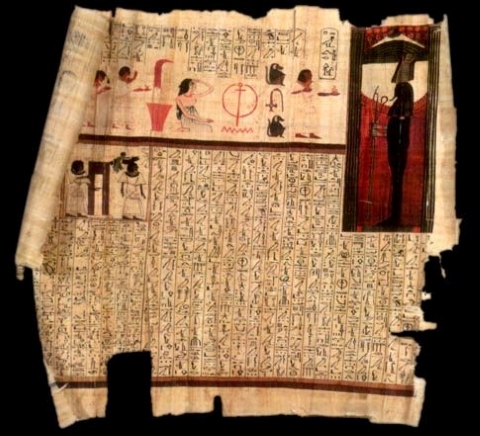
Instead of carving texts onto tomb walls or coffins, scribes wrote them on long papyrus scrolls that could easily be rolled, transported, and placed inside the burial chamber.
These scrolls became what modern scholars call the Book of the Dead.
Unlike earlier texts, they combined prayers, magical spells, hymns, religious illustrations, and practical instructions into a single funerary manuscript designed specifically for the deceased individual.
The result was one of the most sophisticated religious works ever produced in the ancient world.
For more than a thousand years, Egyptian families continued commissioning these papyri, making the Book of the Dead one of the longest-lasting religious traditions in human history.
Who Could Own a Book of the Dead?
Because each manuscript was written by hand and often decorated with colorful illustrations, owning a Book of the Dead was expensive.
Professional scribes and artists could spend weeks—or even months—producing a single copy.
As a result, the earliest examples were typically commissioned by:
* Pharaohs
* Queens
* High priests
* Government officials
* Military commanders
* Wealthy merchants
* Members of the Egyptian nobility
Over time, however, simplified and more affordable versions became available to people of more modest means. Some individuals purchased pre-written scrolls with blank spaces left for the owner’s name, allowing scribes to personalize the manuscript shortly before burial.
This practice reveals something remarkable about Ancient Egyptian society: while wealth influenced the quality of a person’s burial, the hope of eternal life was not reserved solely for the ruling elite.
By the Late Period, many ordinary Egyptians aspired to own at least a small collection of protective spells to accompany them into the afterlife.
The Book of the Dead as a Work of Art
Beyond its religious importance, the Book of the Dead is also considered one of the greatest artistic achievements of Ancient Egypt.
Each papyrus was carefully illustrated using vivid mineral pigments that have survived for more than three thousand years. Scenes of gods, sacred animals, temple rituals, celestial boats, and the famous Weighing of the Heart were arranged alongside elegant columns of hieroglyphic text.
These illustrations were far more than decorative embellishments.
Egyptians believed that images possessed magical power. By depicting successful encounters with the gods and illustrating the soul’s safe passage through the underworld, the artwork itself became part of the protective ritual.
In other words, every painted scene reinforced the effectiveness of the accompanying spells.
For modern historians, these manuscripts provide an unparalleled visual record of Ancient Egyptian religious beliefs, artistic techniques, and funerary customs.
Discover more about ancient Egypt secerts with Axatours.
Get ready for the ultimate Egyptian adventure! With Axatours, we take you on exclusive, expertly curated tours of ancient Egypt, designed to immerse you in the heart of Egypt’s rich culture and history. Our experienced team will guide you every step of the way, ensuring an unforgettable journey. For more details and exclusive offers, click the link here and start planning your dream trip!
Written by ATW July 2026.


