
Catacombs of Kom El Shoqafa: Exploring Alexandria’s Most Remarkable Underground Necropolis
Catacombs of Kom El Shoqafa: Exploring Alexandria’s Most Remarkable Underground Necropolis
The Catacombs of Kom El Shoqafa are widely regarded as one of the most extraordinary archaeological attractions in Alexandria and among the most important Roman-era monuments in Egypt. Hidden beneath the bustling streets of Alexandria, this vast underground necropolis offers visitors a fascinating glimpse into a period when Egyptian, Greek, and Roman cultures coexisted and influenced one another.
Recognized as one of the Seven Wonders of the Medieval World, the Catacombs of Kom El Shoqafa stand as a masterpiece of funerary architecture, showcasing a unique blend of artistic styles and religious traditions that cannot be found anywhere else in the world.
The Meaning Behind the Name Kom El Shoqafa
The name (Kom El Shoqafa) originates from Arabic and translates to (Mound of Shards) or (Hill of Broken Pottery). Archaeologists discovered enormous quantities of fragmented clay jars and pottery scattered around the site.
These pottery fragments were left behind by relatives and visitors who came to honor the deceased. During ancient funerary ceremonies, food and drink offerings were brought into the tomb complex, and the containers were often discarded afterward. Over many centuries, the accumulation of these broken vessels created large mounds that eventually gave the area its name.
Historical Background and Construction
The Catacombs of Kom El Shoqafa were constructed during the Roman period, most likely in the second century AD when Alexandria was one of the most influential cities of the Roman Empire.
Originally, the site was designed as a private burial place for a wealthy Alexandrian family. However, as the need for additional burial space increased, the complex gradually expanded into a large communal cemetery serving numerous families over several generations.
The identity of the original owner remains unknown, but the sophistication of the architecture and decorative elements clearly indicates that the project was commissioned by members of Alexandria’s affluent elite.
A Unique Fusion of Three Civilizations
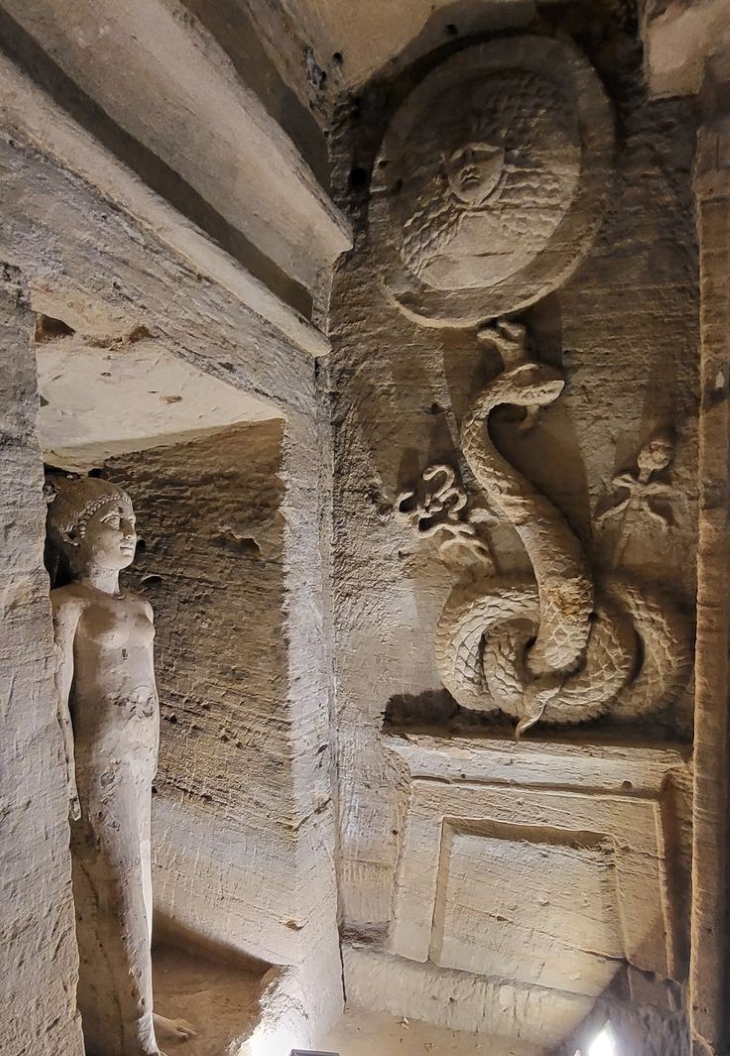
One of the most remarkable aspects of the catacombs is their artistic diversity. Alexandria was a multicultural metropolis where different traditions merged naturally, and this influence is reflected throughout the monument.
The tomb complex combines elements from:
-Ancient Egyptian religious beliefs
-Greek artistic traditions
-Roman architectural design
Rather than existing separately, these influences blend seamlessly together, creating a distinctive artistic style unique to Roman Alexandria.
Expansion of the Underground Complex
The catacombs were not constructed in a single phase. Archaeological evidence suggests that the site expanded gradually over several decades.
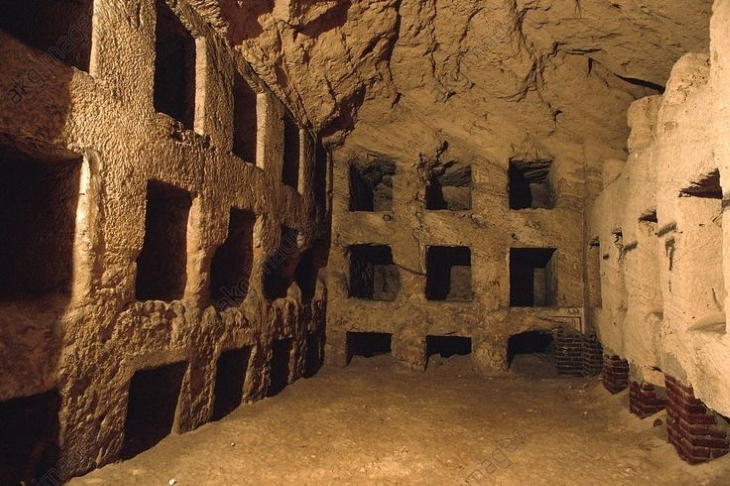
The original family tomb was enlarged repeatedly through the excavation of additional corridors, chambers, burial niches, and ceremonial spaces. Workers carved deep into Alexandria’s limestone bedrock, eventually creating a multi-level underground necropolis capable of accommodating hundreds of burials.
As Alexandria’s population grew and burial practices evolved, the catacombs transformed from a private mausoleum into one of the city’s most significant cemeteries.
The Remarkable Discovery of the Catacombs
For centuries, the catacombs remained hidden beneath the earth until their accidental rediscovery in 1900.
According to local accounts, a donkey unexpectedly fell through the ground into a concealed shaft. When nearby residents investigated the incident, they uncovered the entrance to a forgotten underground world.
Subsequent excavations revealed one of the most important archaeological discoveries in Alexandria. Archaeologists were astonished by the scale, preservation, and artistic significance of the complex.
Today, although parts of the lower level remain submerged due to groundwater, much of the site is accessible to visitors.
Architectural Layout of the Catacombs
The Catacombs of Kom El Shoqafa extend approximately 20 meters below ground and consist of three primary underground levels carved directly into the rock.
The Monumental Spiral Staircase
Visitors begin their journey through a circular shaft surrounded by an elegant spiral staircase.
This impressive staircase served a practical and ceremonial purpose. During funeral processions, the deceased were lowered through the central shaft while mourners descended alongside them to participate in burial rituals.
The shaft also provided ventilation and natural light to the lower chambers.
The Rotunda
At the base of the staircase lies the Rotunda, a circular hall supported by columns.
This chamber functioned as a transitional area where visitors gathered before proceeding into the deeper sections of the necropolis. Its architectural elegance immediately demonstrates the wealth and status of those buried within the complex.
The Triclinium
One of the most fascinating sections of the catacombs is the Triclinium, a large banquet hall used for funerary feasts.
Following burial ceremonies, family members and friends would gather here to commemorate their loved ones through memorial meals, a common Roman tradition.
Stone benches built into the walls allowed guests to recline while dining, reflecting the customs of the Roman elite. The presence of this hall highlights the cultural integration of Roman social practices within an Egyptian funerary setting.
The Main Burial Chamber
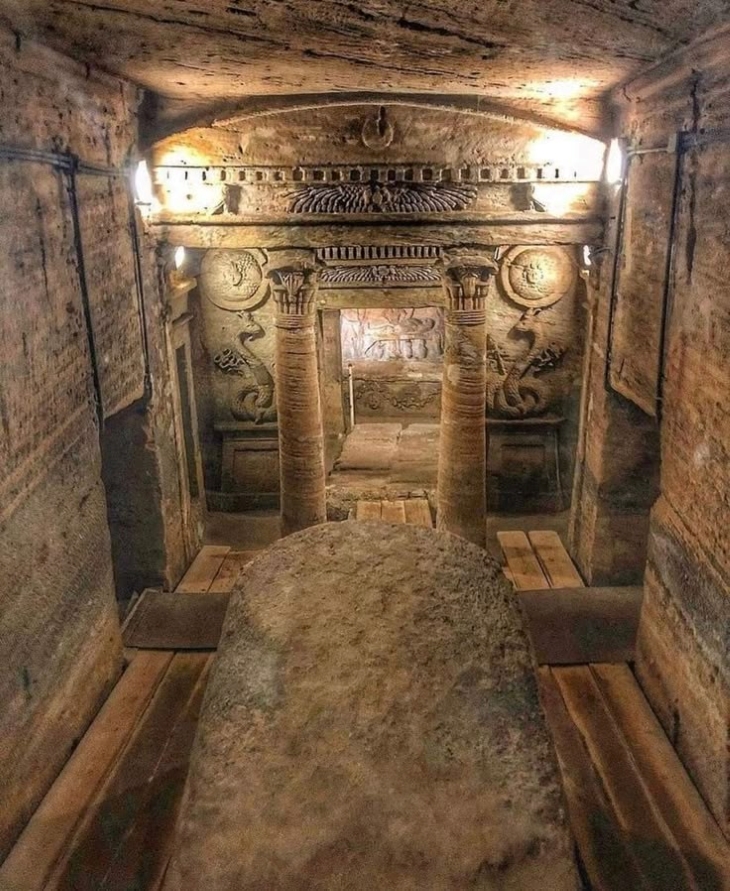
The centerpiece of the complex is the richly decorated burial chamber, considered one of the finest examples of Greco-Roman funerary art in Egypt.
The chamber demonstrates an extraordinary combination of cultural influences.
Ancient Egyptian motifs include:
-Winged solar discs
-Sacred cobras
-Lotus flowers
-Traditional funerary symbols
At the same time, visitors can observe:
-Roman military attire
-Greek architectural columns
-Classical decorative styles
-Roman artistic techniques
The guardian statues flanking the entrance perfectly illustrate this fusion. Their bodies resemble Roman soldiers, while their heads wear the traditional Egyptian royal headdress associated with the pharaohs.
The Rock-Cut Sarcophagi
Inside the burial chamber stand three enormous stone sarcophagi carved directly into the bedrock.
Unlike freestanding coffins, these sarcophagi could never be moved because they formed part of the surrounding structure. Bodies were placed inside through openings located at the rear of each coffin.
This unusual design is one of the defining architectural features of Kom El Shoqafa and reflects the ingenuity of its builders.
The Hall of Caracalla: Alexandria’s Mysterious Chamber
Among the most intriguing areas within the catacombs is the Hall of Caracalla.
Who Was Emperor Caracalla?
Caracalla ruled the Roman Empire between 198 and 217 AD and is remembered as one of Rome’s most controversial emperors. Historical records describe him as ruthless and often violent in dealing with political opposition.
Why Is the Hall of Caracalla Significant?
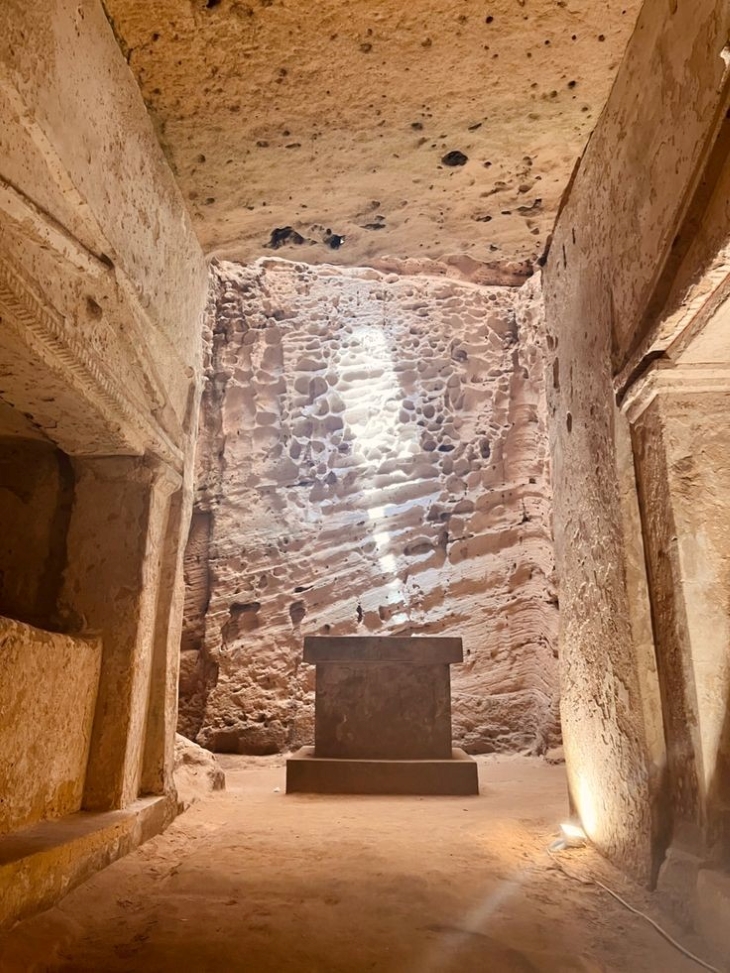
Archaeologists discovered large quantities of human and animal remains within this chamber, making it one of the most debated sections of the catacombs.
According to many historians, the chamber may contain victims connected to the massacre ordered by Caracalla during his visit to Alexandria. Ancient sources report that the emperor punished the city’s inhabitants after they publicly ridiculed him.
While definitive proof remains elusive, many scholars believe the remains found here may be linked to those tragic events.
Animal Remains and Archaeological Mysteries
In addition to human skeletons, excavations uncovered horse bones and other animal remains.
Researchers continue to debate their significance. Some suggest they belonged to military animals, while others believe they were connected to ritual practices or ceremonial burials.
Regardless of the exact explanation, the Hall of Caracalla provides valuable insight into the social and political tensions that existed in Roman Alexandria.
Cultural and Archaeological Importance
The Catacombs of Kom El Shoqafa offer a rare opportunity to study how different civilizations interacted during antiquity.
The site serves as a living record of:
-Roman Alexandria’s multicultural society
-Ancient funerary traditions
-Religious syncretism
-Cross-cultural artistic development
-Greco-Roman architecture in Egypt
Few archaeological monuments illustrate cultural integration as clearly or as beautifully as Kom El Shoqafa.
Why Visit the Catacombs of Kom El Shoqafa?
For travelers exploring Alexandria, the Catacombs of Kom El Shoqafa provide an unforgettable journey beneath the city streets into a hidden world of history, art, and mystery.
Visitors can admire remarkable architectural features, discover fascinating stories from the Roman era, and witness firsthand the unique blend of Egyptian, Greek, and Roman influences that shaped Alexandria for centuries.
From the mysterious discovery and impressive underground design to the legendary Hall of Caracalla and the stunning fusion of artistic traditions, the catacombs remain one of Egypt’s most captivating archaeological treasures. A visit to this remarkable necropolis offers a deeper understanding of Alexandria’s rich heritage and an unforgettable encounter with the ancient world.
Discover Catacombs of Kom El Shoqafa with Axatours
Get ready for the ultimate Egyptian adventure! With Axatours, we take you on exclusive, expertly curated tours of Catacombs of Kom El Shoqafa, designed to immerse you in the heart of Alexandra’s rich culture and history. Our experienced team will guide you every step of the way, ensuring an unforgettable journey. For more details and exclusive offers, click the link here and start planning your dream trip!
Written by ATW May 2026.


